Republicans Brace for a “Brutal Evening”
Days before the midterms, GOP strategists are no longer asking whether they'll lose the House, only how badly.
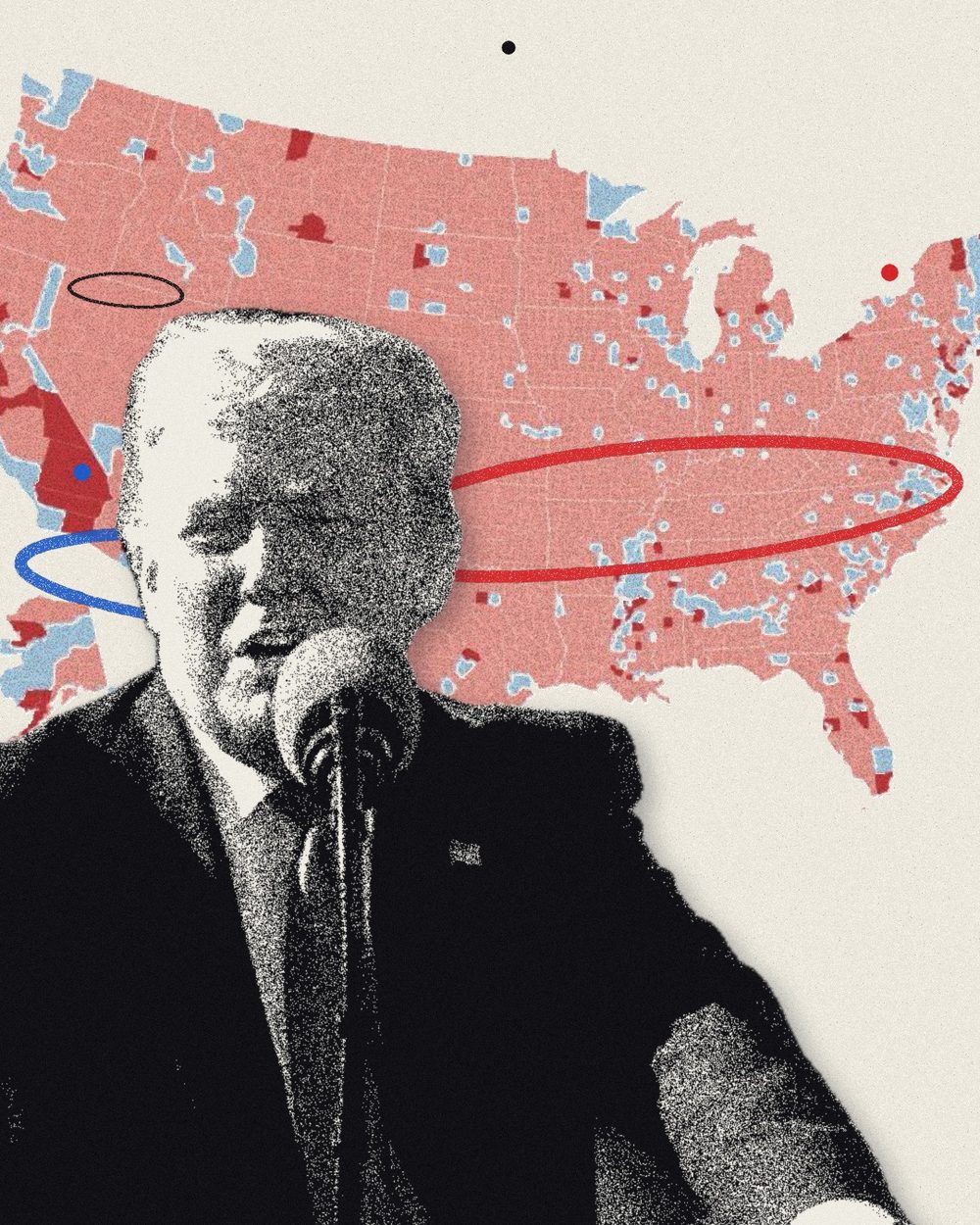
"It could be quite a brutal evening," a senior Republican strategist told Politico ahead of Tuesday's midterm elections. "Once the dominoes start falling it becomes hard to stop them."
The strategist isn't alone. According to Politico's reporting, House Republicans are privately debating not just whether they will lose their majority, but by how many seats. Republican incumbents in districts once considered safe have been asking party leaders for emergency money, according to six people involved in those discussions, cleveland.com reported. Some campaigns have stopped paying for their own internal polls altogether and moved that money into persuading voters instead. Some Republicans, Politico reported, would simply rather not look at the numbers.
The mood shows in how Republicans talk about it. Asked about the political environment, one Republican strategist working on midterm races answered with a video of a burning dumpster being swept away by floodwaters. Another offered a darker kind of optimism: "I can see the light at the end of the tunnel. It might be a semi-truck, but at least I can see it."
 Much of the gloom traces back to the White House. President Trump's approval rating fell to 30% in a Pew Research Center survey, the lowest of his second term and, according to The Independent, the worst for any sitting president heading into a midterm since Harry Truman in 1946. Voters are unhappy about higher gas and food prices and about the war with Iran, and many see the president as doing too little about the cost of living. Conservatives also worry that young men, who turned out strongly for Trump two years ago, will stay home this time, feeling that the economic promises made to them weren't kept.
That matters because midterms are, in large part, a verdict on the president. The president's party usually loses seats in a midterm, and an unpopular president tends to make those losses bigger. In 2010, two years into Barack Obama's presidency, Republicans gained 63 House seats. In 2018, during Trump's first term, Democrats gained 41. This year, Trump has made himself the center of the Republican campaign, urging supporters to vote as if he were on the ballot himself. That strategy can fire up his base, but it also ties every Republican candidate to a president most voters disapprove of.
The national numbers point the same way. In Emerson College's final national poll, 52% of likely voters said they would vote for a Democrat for Congress and 42% for a Republican, a 10-point gap. On Oct. 23, the Cook Political Report said Republicans' chances of keeping the House had "all but evaporated" and projected that Democrats would gain between 12 and 22 seats.
 Every midterm has its share of close races, and this one is no exception. What worries Republicans is where those races are showing up: in states Trump won by double digits in 2024, where the party normally doesn't have to spend much time or money. In Texas, which hasn't elected a Democrat to the Senate since 1988, the race between Democrat James Talarico and Republican Ken Paxton is tied at 49% in a Fox News poll. In South Carolina, a state Trump won by nearly 18 points, the Senate race is tied 48% to 48% in a New York Times/Siena poll. Democrats lead recent polls in Kansas, Iowa and Alaska, and even Mississippi, which Trump won by more than 20 points, is no longer rated safe for Republicans by Fox News. Senate races in Florida and Nebraska are drawing attention too.
 In Louisiana, a Republican described the Senate race of the party's nominee, Rep. Julia Letlow, this way: "The cakewalk turned into a knife fight." The same Republican warned that if Democratic turnout surges on Election Day, "it'll be a long night in Monroe."
Even the president's schedule has become a story. Late this week, Trump abruptly canceled weekend rallies in Kansas and Iowa, two of the states where Republicans are now playing defense. When a Reuters reporter asked whether the cancellation was health-related, Trump snapped, "You are disgusting," according to The Independent. The rallies were later put back on his schedule.
Democrats, for their part, are trying not to get ahead of themselves. Some have privately warned colleagues that they probably won't reach the 235 House seats they held after the 2018 midterms. "I don't think anyone ever believed we were going to have 2018 numbers," one House Democrat told Politico. "I honestly think the results are going to be all over the place. Caution seems smart to me." Not every Republican buys the caution. "Any Democrats telling you they aren't winning the Senate besides a couple of seats are sandbagging expectations," one senior Republican said.
There are real reasons the night might not be as brutal as Republicans fear. Republicans still lead in some important states: in Florida, Sen. Ashley Moody led Democrat Angie Nixon 50% to 44% in a New York Times/Siena poll. Polls have underestimated Republicans before, most notably in 2016 and 2020, and many of the closest races are within the margin of error. Midterm turnout is harder to predict than turnout in a presidential year. A Senate Democratic operative summed it up for Politico: "I would rather be us than them," but "everything is close."
The stakes reach well beyond Tuesday night. If Democrats win the House, they could block Trump's agenda for the rest of his term and open investigations into his administration, leaving him, in effect, a lame duck with two years still to go. Around 40 million Americans had already voted by Friday. Everyone else votes on Nov. 3, and Republicans will find out whether their strategists were being too pessimistic, or not pessimistic enough.
Photos: Gage Skidmore / Wikimedia Commons (CC BY-SA 2.0); The White House; Antonioaesparza / Wikimedia Commons (CC BY-SA 4.0); U.S. House of Representatives. Maps: Spino-Soar-Us, ZackCarns / Wikimedia Commons (CC0).
Write for Youth Outsider. Join the staff, or pitch a single piece as a guest.
Get involved