
The Race to Run the U.N.
Seven straw polls in, no candidate has won over all five veto powers. With António Guterres's term ending Dec. 31, the fight to choose the world's top diplomat is getting crowded, and messy.
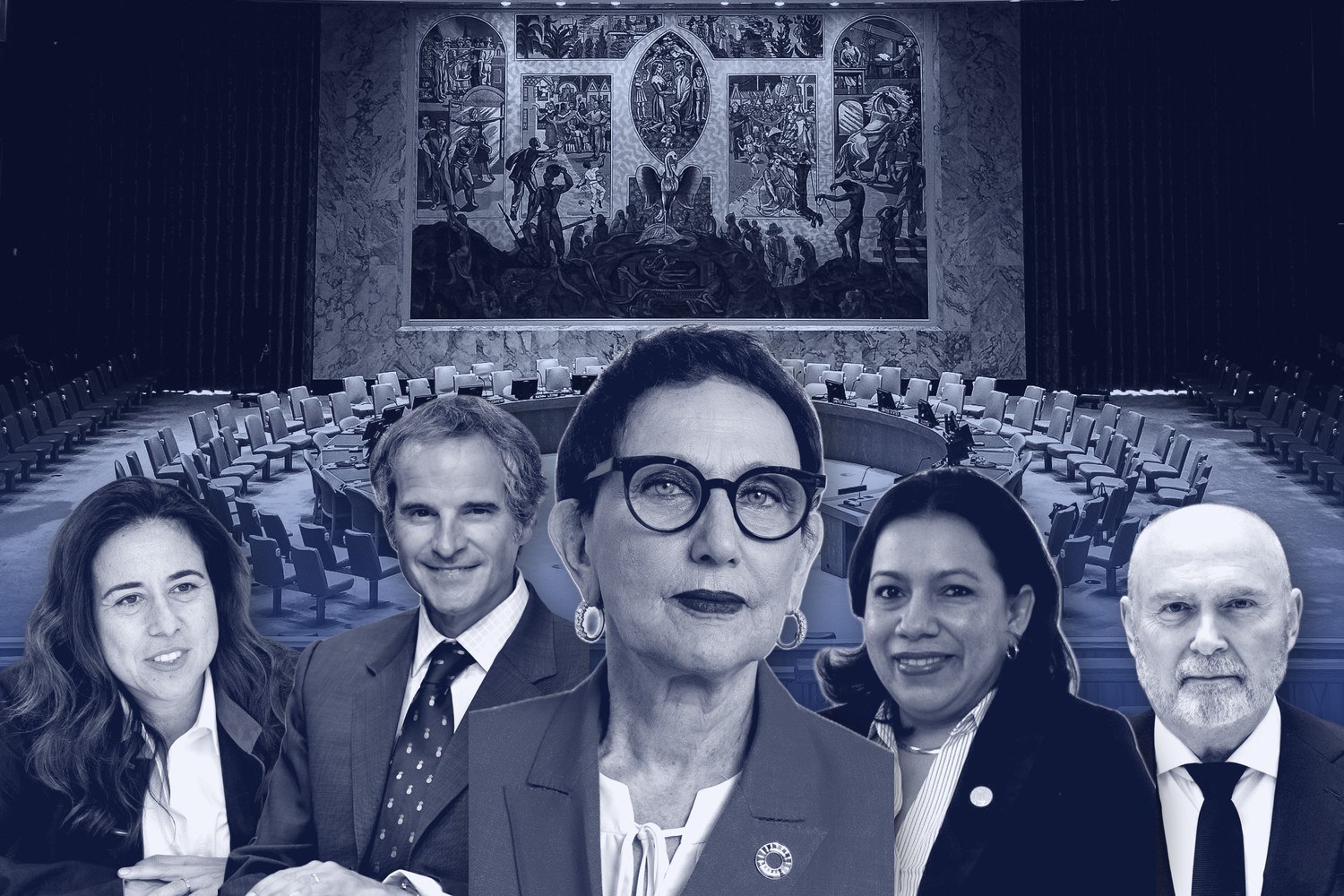
Every few weeks this fall, the 15 members of the U.N. Security Council have met behind closed doors and marked a ballot for each person who wants to be the next secretary-general. They can "encourage," "discourage" or give "no opinion." The results are never officially released, but they leak within hours. After seven of these straw polls, the first on July 30 and the latest on Oct. 30, the Council still has no winner, and António Guterres's second term ends on Dec. 31.
The secretary-general runs the United Nations' staff, speaks for the organization in a crisis and is often the person sent to talk warring sides toward a ceasefire. The 193-member General Assembly makes the appointment, but only on the Security Council's recommendation. Under Article 97 of the U.N. Charter and the Council's practice, a candidate needs at least nine of its 15 votes and no veto from any of the five permanent members: the United States, China, Russia, the United Kingdom and France. That last rule is what makes the race so hard. Any one of the five can sink a candidate on its own.
There is also an unwritten rule. The job usually rotates among the world's regions, and many governments say it is Latin America and the Caribbean's turn. No one from the region has held the post since Peru's Javier Pérez de Cuéllar left in 1991. On Oct. 27, the region's main bloc, CELAC, issued a joint statement calling for that rotation to be respected. A second push runs alongside it: in 80 years, the U.N. has had nine secretaries-general, all men, and most of this year's candidates are women.
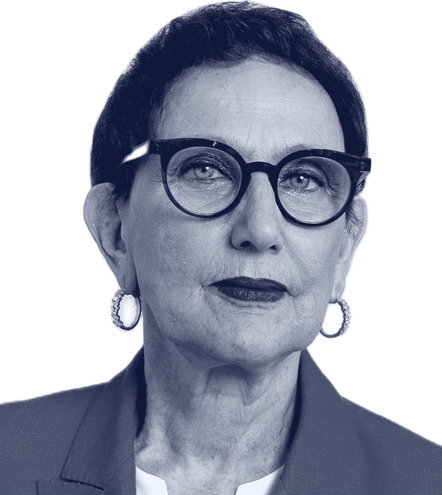 The front-runner fits both descriptions. Rebeca Grynspan, 70, a former vice president of Costa Rica who now leads U.N. Trade and Development, has topped nearly every poll. In the Oct. 30 round she had her best result yet, with 11 "encourage" votes and four "discourage". This is "not like a business-as-usual type of election," she told Euronews. "Time is running out."
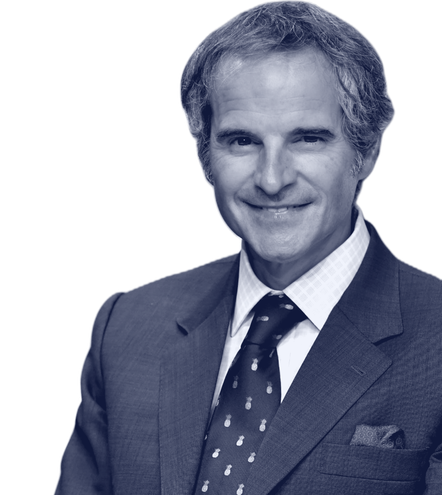 Close behind are Rafael Grossi of Argentina, the head of the International Atomic Energy Agency, the U.N.'s nuclear watchdog, with 9 encourage and 4 discourage votes, and Carolyn Rodrigues-Birkett, Guyana's ambassador to the U.N. and a former foreign minister, with 8 and 6. The other declared candidates have struggled: Uganda's Olara Otunnu, a former U.N. official on children in war, and two Ecuadorians, former General Assembly president María Fernanda Espinosa and diplomat Ivonne A-Baki, have drawn more discouragement than support. Two well-known names have already dropped out. Chile's former president Michelle Bachelet lost her own country's backing when its new president, José Antonio Kast, withdrew Chile's support in March, and she formally left the race in September. Senegal's former president Macky Sall withdrew in October, saying he hoped to help secure a consensus candidate.
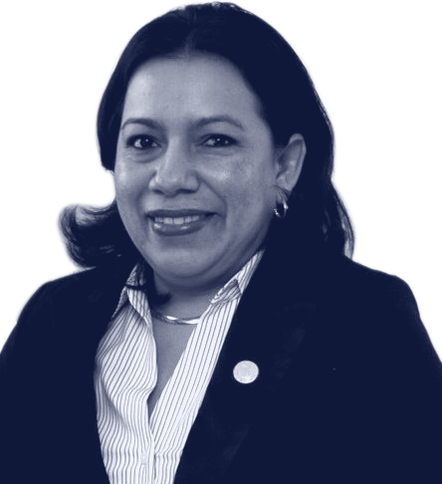 The real problem showed up on Oct. 16. For the first time, the permanent members voted on red ballots, so everyone could see how the veto powers felt. Grynspan, Grossi and Rodrigues-Birkett each got two red "discourage" votes, meaning at least two of the five powers were signaling they could block each of them. No candidate had the support of all five. By the next round, the Council had switched back to ballots that hide which votes come from the permanent members, so it is unclear whether those threats still stand.
The United States is a big part of the uncertainty. Politico reported in October that the Trump administration opposes the entire current field and wants new candidates who share its push to reform the U.N. U.S. Ambassador Mike Waltz has said the organization needs "strong, energetic leadership" and that a woman would be welcome "if she is the best candidate," but "we really just need the best candidate." Then, on Oct. 26, The Wall Street Journal reported that Trump officials were promoting former Hungarian Prime Minister Viktor Orbán, who lost Hungary’s election in April, as a possible joint candidate of the U.S., Russia and China, according to Euronews. Orbán has not been nominated, and Poland's foreign minister said his country would not support him.
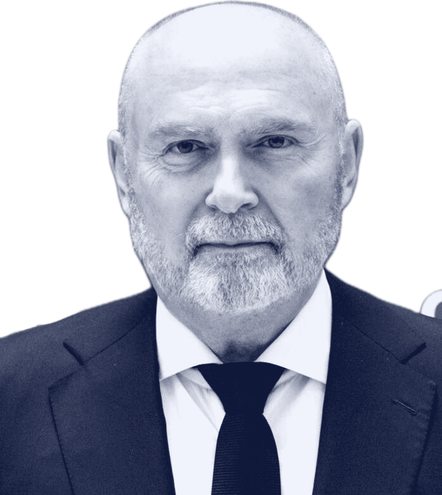
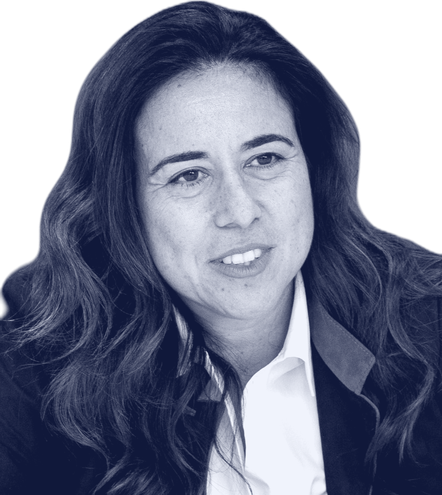 New names have entered as the old ones stall. The United Arab Emirates nominated Lana Nusseibeh, its minister of state and former U.N. ambassador, on Oct. 21. Asked about the push for a woman, she has said, "I am not running because I am a woman." Human rights groups have opposed her candidacy, pointing to the UAE's record and to her past denials of U.N. reports that the UAE helped arm Sudan's Rapid Support Forces. She came in fourth in her first poll, with 7 encourage and 6 discourage votes. Hours after that poll, Turkey nominated Feridun Sinirlioğlu, a former foreign minister who now leads the OSCE, Europe's largest security organization, a move that could further weaken Latin America's chances.
 Supporters of the process say this is how it is supposed to work: the straw polls are meant to test candidates until one emerges that no major power will block, and in 2016 it took six rounds to settle on Guterres. Critics say a choice this important is still made largely by five countries in private, and that the U.N.'s other 188 members get little real say. Either way, whoever wins will inherit an organization under strain. The U.N. faces a deep funding shortfall after the United States, historically its largest donor, cut its contributions, while wars in Ukraine, Gaza and Sudan have exposed a Security Council that Guterres himself has called "practically paralyzed."
If the Council cannot agree by the end of the year, analysts say Guterres could stay on temporarily as a caretaker. The next straw poll has not been scheduled, but it may bring back the red ballots, and with them a clearer answer to the question that will decide the race: which candidate, if any, can get past all five vetoes.
Photos via Wikimedia Commons: Security Council chamber by Jdforrester (CC BY 4.0); Rebeca Grynspan by Gustavobarreto-un (CC BY-SA 4.0); Rafael Grossi by IAEA Imagebank (CC BY 2.0); Carolyn Rodrigues-Birkett by the Australian Department of Foreign Affairs and Trade (CC BY 4.0); Lana Nusseibeh by Jennifer Jacquemart/European Union (CC BY 4.0); Feridun Sinirlioğlu by Liviajusztinmajercsik (CC BY-SA 4.0).
Write for Youth Outsider. Join the staff, or pitch a single piece as a guest.
Get involved